
Dutchess County Arrest Log Sources
Dutchess County publishes no 72-hour, seven-day, or rolling arrest blotter. That option simply does not exist. The nearest official source is the Dutchess County Sheriff news-release archive. It is a collection of dated stories. They stretch back through annual pages. A typical release names charges, lists cooperating agencies, and notes an arraignment or remand. Some include a booking image. Coverage is selective, though. The archive makes no claim to list every arrest, summons, or appearance ticket. Items stay put as dated articles rather than rolling off a booking queue. Call it an official release archive, not a complete Dutchess County arrest log.
Read the Dutchess Arrest Blotter
Search by date first. Names alone will slow you down. Pick the likely arresting agency and the event date, then weigh the publication date against court and custody details, since a story may run well after the arrest itself.
- Search the current sheriff release page for the name, municipality, agency, or alleged event.
- Move to the relevant annual sheriff archive if the date is no longer on the current page.
- Check the arresting city or town police records channel. A local report can exist even when no sheriff release was issued.
- Use the court’s own case tools or clerk to follow arraignment and disposition. A disposition is the case’s final recorded outcome.
- Submit a focused records request when the public narrative does not contain the underlying arrest or admission record.
Need current custody answers fast? The 24 Hour Arrests route uses the jail and VINE system. The multi-day approach on this page works differently. It digs backward through dated publications and record custodians, so it can still surface a Dutchess County arrest after release.
Dutchess Arrest Log Entry Fields
A sheriff narrative can hold plenty of useful facts. Just remember the format is not a standard booking record. Read each item for exactly what it says.
| Possible detail | How to read it |
|---|---|
| Name and date | Confirm the person, event date, and separate publication date. |
| Agency and place | Shows who reported the event and which records office may hold the report. |
| Charges | Charges as announced, not convictions or final court outcomes. |
| Arraignment, bail, or remand | A snapshot of the early court or custody stage that may later change. |
| Booking photograph | Appears only in selected releases; no universal Dutchess photo policy was found. |
| Case result | Often absent from the first release and best verified with the handling court. |
A police report may add arrest time, statute citations, counts, and officer details. A jail record may add release or transfer dates. Neither is guaranteed on a public news page. Before concluding anything from a name match, check the agency, the date, and the case identifiers. Verify against the official record. That is where the real answers live.
Dutchess Weekend Arrest Reporting
Weekend arrests do not follow a posting schedule. Nothing about the Dutchess sheriff's releases sets a holiday or weekend pattern. An arrest can happen Saturday night, then sit unreported until a business day. Some stories wait until an investigation reaches a public stage. None of that means a delayed batch from the Justice and Transition Center. It is simply editorial timing. A Monday search should span several calendar days. Run one search on the event date. Run another on the days after it. Then go to the police agency that handled the event. Someone released before your search may not show in current custody. The agency report and court case still exist.
Note: Dutchess County posts no holiday catch-up schedule, so name the event date and the reporting agency in any request.
Dutchess Arrest News Is Selective
News outlets sit a step beyond the official sources. Weekly papers and rolling regional sites both publish Dutchess arrest stories, but they pick what to cover. Beacon Free Press and Southern Dutchess News run weekly editions across Dutchess communities, sometimes printing arrest coverage with images supplied by an agency or the district attorney. That weekly rhythm is nothing like a jail admission log or a sheriff announcement. Editors choose stories for news value alone, so the result is never a complete blotter. The Hudson Valley Post Dutchess County section shows how a rolling regional outlet handles the same beat.

A news story can name an agency or a case. Still, the release, the report, and the court record hold the facts worth trusting. The Patch Mid Hudson Valley hub works the same way as a discovery layer.
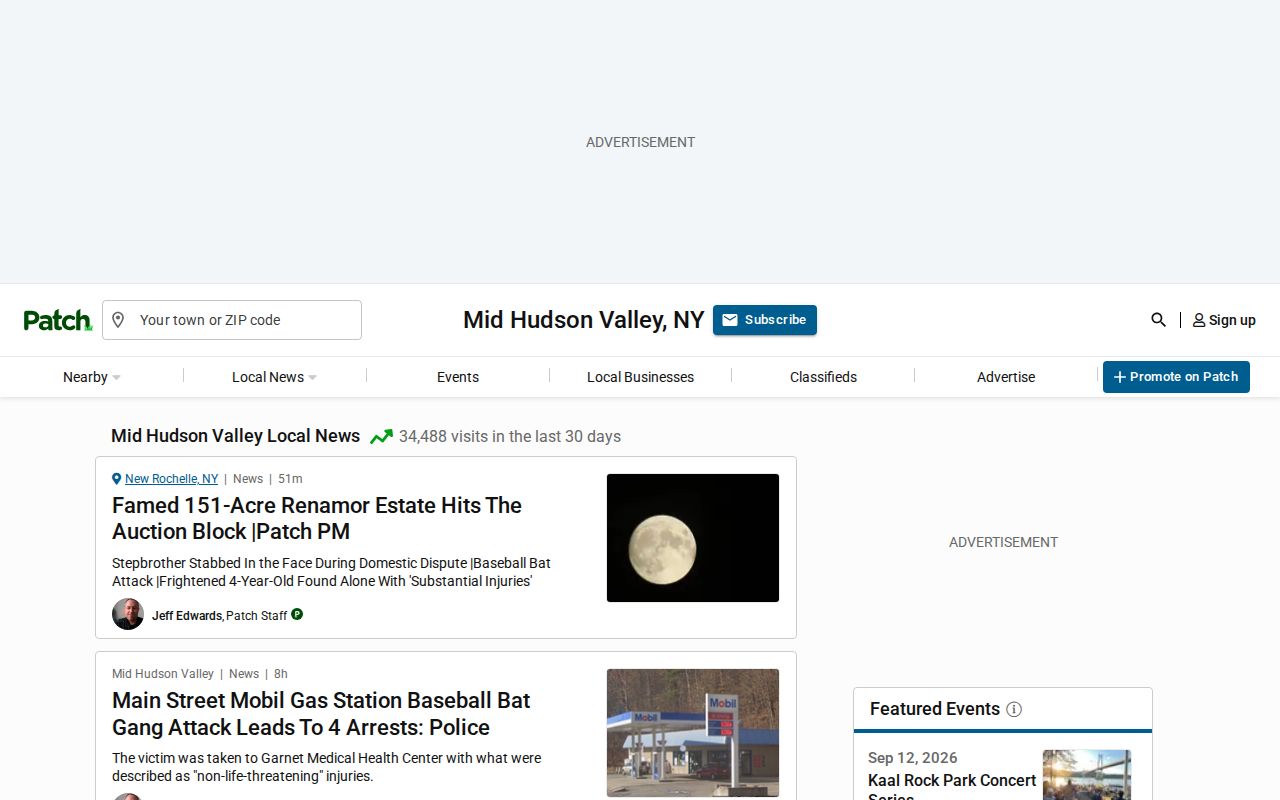
Patch, the Poughkeepsie Journal, News 12 Hudson Valley, and Daily Voice all publish selected regional crime news. Their reports lag sometimes. Routine arrests get skipped, and older details can linger after a case moves on. Treat these outlets as leads, then confirm custody status through the county, the agency, or the court.
Dutchess Sheriff Arrest Releases
One example shows both the value and the limits of the archive. The sheriff's North Bridge Street Raid and Arrest release is preserved on the official site.
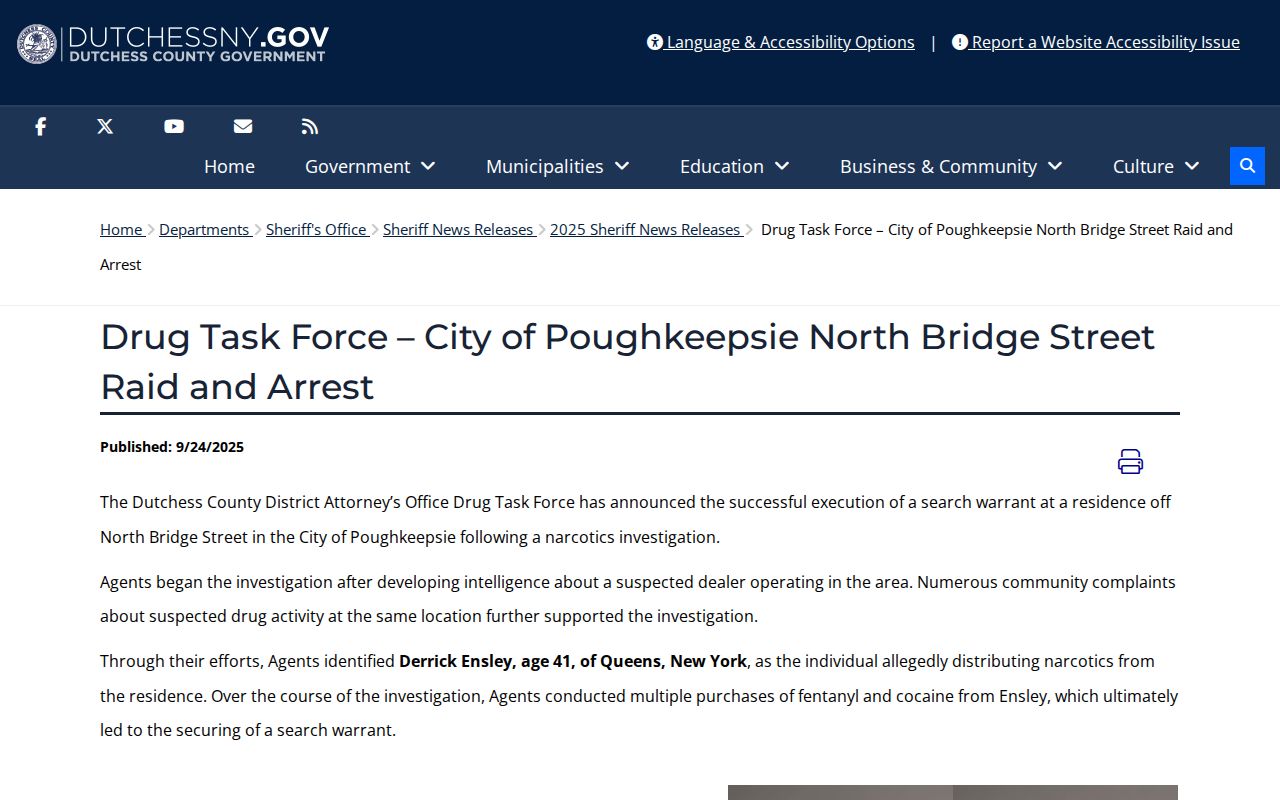
A dated sheriff article gives you the agency's own narrative, with the wording it chose for each charge. Some releases include a booking photograph. Not every admission gets a release, though. The article is a snapshot, not a live custody list. Read the verbs closely. "Arrested," "charged," and "remanded" mark different stages of a case. Remand means a court ordered the person held. Release, transfer, plea, dismissal, acquittal, or sentence all have to be checked elsewhere, so keep the dated article as one row in the trail rather than the final case record.
Dutchess Arrest Archives and Retention
Archives and retention are two different things in Dutchess County. A story vanishing from a web page proves nothing about what the agency still holds. New York's LGS-1 local-government schedule sets minimum periods for records in any format. After those periods, lawful disposal is allowed, subject to holds and other rules. Some records with lasting value stay permanent.
The law-enforcement schedule gets specific. An incident, complaint, or arrest summary log never sent to DCJS can be kept permanently. Case-investigation files vary by case type. The most serious matters may be permanent. Felony files generally run 25 years after closure. Misdemeanors carry five years. Violations or traffic matters get one year under the cited schedule conditions. Individual identification files can hold fingerprints, photographs, local arrest data, and disposition information. Each category follows its own retention rules.
Those categories are not a promise of public access. They are not a timetable for a booking photo either. Sealing, youthful-offender status, privacy, law-enforcement need, and fair-trial concerns can all restrict disclosure.
For a record beyond the visible release pages, contact sheriff Central Records. The Justice and Transition Center is another option. Give the full name, approximate date, arresting agency, and the record series you want. Ask whether the file remains with the agency or moved to another county custodian. Ask about legal holds too. The Dutchess Ancient Document Search covers historical warrants, bonds, and recognizances. It is not evidence of a current arrest. It does not prove a warrant either.
Note: A court clerk, not a retained arrest story, is the best source for a certified disposition showing how a case ended.